
Pop Up Beach Tent Canopy: How to Choose the Right Shade for Your Beach Day
A couple spending a few hours at the beach needs a different shade setup than a family bringing chairs, coolers, toys, and food for the day. Carrying distance and changing coastal conditions matter too.
That's why choosing a pop up beach tent canopy should start with how you'll use it. Whether you need a portable beach shade for a short trip or a larger beach shade canopy for a family day, consider your group, gear, transportation, and beach conditions.
What Is a Pop Up Beach Tent Canopy?
A pop up beach canopy is an open-sided shelter supported by a collapsible frame. This type of beach tent canopy provides shared shade while leaving multiple sides open for access and airflow.
Unlike an umbrella, which provides localized shade, a canopy can cover several people. An enclosed beach sun shelter or beach shade tent offers more privacy but usually provides less open group space.
If you prefer a simple setup without custom graphics, blank canopy tents are another option to compare.
Which Beach Canopy Setup Fits Your Needs?
Think about what will happen under the canopy before choosing its size.
Family beach days: A family beach canopy should provide space for adults, children, chairs, coolers, bags, and toys.
Couples or small groups: A compact pop up sun shelter may be easier to transport when only a few chairs need shade.
Kids' play areas: Prioritize open shade where children can play while remaining visible.
Long beach days: Allow extra room for food, towels, coolers, and seating.
Sports and group gatherings: Create a shaded rest area without limiting movement.
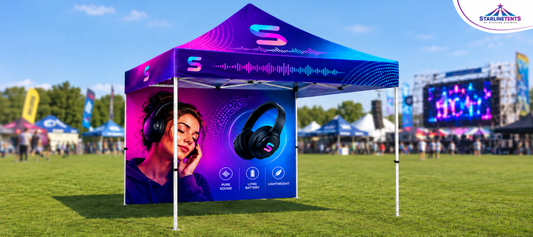
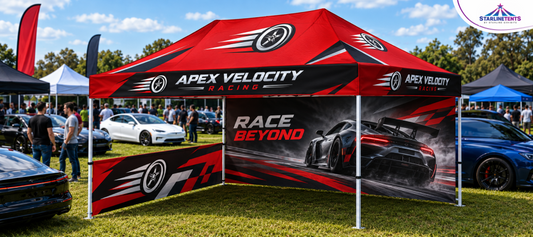
Beach promotions: Where local rules permit, custom canopy tents can provide a visible base for community, outreach, or promotional events.
Pop Up Beach Canopy vs. Umbrella vs. Beach Tent
Your ideal shelter depends on coverage, privacy, and portability.
|
Consideration |
Pop-Up Canopy |
Beach Umbrella |
Beach Tent |
|
Shade coverage |
Larger |
Limited |
Moderate |
|
Airflow |
Usually good |
Excellent |
Varies |
|
Group space |
Good |
Limited |
Limited to moderate |
|
Privacy |
Depends on setup |
Low |
Higher |
|
Portability |
Moderate |
High |
High to moderate |
An umbrella makes sense when easy carrying is the priority. A beach tent offers more privacy or side coverage. A canopy works well when several people need shared shade.
When choosing a canopy for the beach, consider which matters most: group space, portability, airflow, or privacy.
What Size Pop Up Beach Canopy Do You Need?
Don't choose by headcount alone. Consider chairs, coolers, bags, children's gear, and walking space.
Four people using compact chairs need less room than four people bringing loungers, coolers, and several bags.
Think of any beach canopy size guide as a starting point. Your actual space requirement depends on how much equipment you're bringing and how much room people need to move comfortably.
Larger canopies offer more usable space but require more beach area and may be harder to transport.
For a common event-size option, compare 10x10 custom canopy tents with the space your group actually requires.
Check Beach Rules Before You Pack
Rules vary across U.S. beaches. Some locations restrict shelter size, placement, sidewalls, stakes, or anchoring methods, while others may prohibit certain shelters.
Check the current rules for your specific beach before packing your canopy.
Features That Matter in a Portable Beach Canopy
A portable beach canopy needs to be manageable from your vehicle to the sand, not just practical once opened.
Portability: Compare packed dimensions, weight, and carrying distance.
Frame: Check the frame design, locking system, and recommended number of people for setup.
Fabric: Review the manufacturer's material, care, and stated sun-protection specifications.
Coverage: Make sure the footprint accommodates your people and gear.
Ventilation: Open sides support airflow. A beach canopy with sidewalls can add coverage and privacy but may change airflow and wind exposure.
Anchoring: For a beach canopy for sand, check compatible anchoring methods and local restrictions.
Storage: A suitable carrying case simplifies transportation. Starline's canopy tent accessories include storage bags, sandbags, stakes, ropes, and other compatible equipment.
How to Keep a Beach Canopy Stable on Sand
Use anchoring equipment suitable for your canopy, sand, and local rules. Depending on the setup, this may include approved sand anchors, sand-filled weights, or guy lines.
When choosing a beach canopy for windy conditions, focus on frame construction, compatible anchoring, and manufacturer guidance rather than assuming any shelter is windproof.
Position anchors and lines where they won't create unnecessary trip hazards. Coastal conditions can change quickly, so recheck the shelter throughout the day and take it down when conditions become unsuitable.
How to Set Up and Pack Your Beach Canopy
Follow the manufacturer's instructions for your model. A typical process includes:
-
Choose a permitted setup area.
-
Open and raise the frame.
-
Attach and tension the canopy roof.
-
Secure the required anchoring points.
-
Recheck the setup as conditions change.
-
Collapse the frame evenly when leaving.
Remove sand before packing and allow wet fabric to dry completely before storage.
What to Consider Before Buying
Match your canopy to how you expect to use it.
|
Your Priority |
What to Consider |
|
Family use |
Space for people and gear |
|
Longer carrying distance |
Packed size and carrying case |
|
Frequent setup |
Frame operation |
|
Extra coverage |
Compatible sidewalls |
|
Wind and changing conditions |
Compatible anchoring options |
|
Promotional use |
Custom-printing options |
|
Repeated use |
Replacement components |
For repeated use, check whether compatible accessories and replacement components are available. Canopy replacement roofs and walls can help when coverage or graphics needs change.
Choose a Canopy for Your Beach Day
The right pop up beach tent canopy isn't automatically the largest. Consider your group, gear, shade needs, carrying distance, anchoring requirements, conditions, and local rules.
Choose the shelter around your actual beach day, not simply the size printed on the package.
FAQs
Can I leave a beach canopy unattended?
Avoid leaving a canopy unattended unless local rules and manufacturer guidance allow it. This is especially important when using a beach canopy for wind and changing coastal conditions, since conditions can shift during the day.
How can I reduce sand around my beach canopy?
Keep sandy or wet items near the edge of the shelter and shake them off before placing them inside. Before packing, brush loose sand from the frame, roof, and accessories.
Should I choose a beach canopy with straight or slanted legs?
Compare usable shade, overall footprint, frame construction, and manufacturer specifications. With slanted-leg designs, remember that the total footprint can be wider than the shaded area underneath.
Can one person set up a pop up beach canopy?
It depends on the frame and manufacturer instructions. Some compact shelters may be manageable alone, while larger canopy frames may be easier or recommended to set up with two or more people.
Can I use a beach canopy away from the beach?
That depends on the canopy's intended use. For parks, picnics, markets, or backyard events, check compatible anchoring methods, accessories, surface requirements, and manufacturer guidance before setting up.
Tags: