
Party Tents and Canopies: What Size and Style Is Right for Your Celebration?
A 10×20 canopy might work perfectly for a graduation buffet but feel cramped with 20 seated dinner guests. The difference isn't just the number of people; it's how they use the space.
Choosing party tents and canopies means balancing guest capacity, tent shape, furniture layout, and weather coverage. Whether you're planning a backyard birthday, family reunion, or corporate celebration, understanding these details helps you avoid buying a tent that's either too small or unnecessarily large.
How Do You Choose the Right Party Tent Size for Your Guest Count?
Start with the event layout, not just the guest list. As a general planning estimate, allow 6–8 square feet per standing guest and 12–15 square feet for seated dining. Add space for food stations, entertainment, and equipment separately.
|
Tent Size |
Covered Area |
Best Starting Use |
|
10×10 ft |
100 sq. ft. |
Refreshments or gift stations |
|
10×15 ft |
150 sq. ft. |
Small backyard activity areas |
|
10×20 ft |
200 sq. ft. |
Rectangular seating or dining zones |
|
20×20 ft |
400 sq. ft. |
Small seated celebrations |
These are suggested uses, not guaranteed capacities.
For example, 20 seated guests may need 240–300 square feet before adding a buffet. That makes a 10×20 canopy too small for the entire dining arrangement.
Measure your available ground space and leave clearance for entrances, walkways, and anchoring. You can compare available dimensions in Starline Tents' blank pop-up canopy collection to find a starting point for your event layout.
Which Party Tent Shape Works Best for Different Celebrations?
Square and rectangular canopies prioritize usable layouts, while star-shaped and inflatable tents bring distinctive styling to outdoor events. Choose based on both appearance and function.
Square Canopies for Birthdays and Family Gatherings
Square party canopy tents suit grouped seating, kids' activities, and refreshment stations. A 10×10 works for compact activity zones, while a 20×20 canopy gives you more room for small celebrations.
Their balanced shape works particularly well on open lawns. For smaller gatherings, a 10×10 blank pop-up canopy is one option to consider when planning a compact covered area.
Rectangular Canopies for Graduation Parties
A 10×20 pop-up canopy fits longer patios, driveways, and narrow backyard spaces.
Its extended shape makes arranging buffet counters, dining tables, or beverage stations easier without occupying a wide section of the yard. Explore the 10×20 blank pop-up canopy to compare a rectangular option for your celebration.
Star-Shaped Tents for Outdoor Corporate Events
Star tents feature a raised central pole and pointed fabric sections, creating an eye-catching roofline.
They suit festivals, company celebrations, and open-air lounge areas. However, the central pole and extended anchoring footprint make them less practical for tightly packed dining layouts.
If appearance and event branding are important, explore Starline Tents' custom canopy tent collection for available canopy styles, including star tents.
Inflatable Tents for Themed Celebrations
Inflatable tents come in distinctive curved, arched, and dome-style configurations.
They're useful for branded parties, promotional events, and entertainment zones where appearance matters. Check the air-support system, entrance clearance, and setup requirements before buying.
Is One Large Party Tent Better Than Multiple Smaller Canopies?
Choose one large tent for shared dining and several smaller canopies for separate activities.
For a graduation party, you could use a 20×20 canopy for seating and a 10×10 shelter for refreshments.
For 100 guests attending a corporate dinner, a larger continuous structure may make furniture placement and circulation easier than several separated canopies.
Remember that combined coverage doesn't equal uninterrupted space. Two 10×20 tents provide 400 square feet altogether, but their individual legs, entrances, and gaps affect the arrangement.
For substantial receptions, purpose-built large party tents may be more suitable.
Can Waterproof Party Tents Handle Rain and Summer Heat?
Waterproof party tents can provide rain coverage within their design limits, but guest comfort depends on drainage, ventilation, and proper setup.
Check these features before purchasing:
-
Roof material: Look for documented water resistance, seam construction, and UV protection.
-
Sidewalls: Help reduce exposure to sideways rain and direct sunlight. Review available canopy sidewalls and replacement roofs when considering additional coverage.
-
Ventilation: Keep airflow in mind when enclosing tents during humid summer weather.
-
Frame durability: Compare construction materials, connectors, and warranty coverage.
-
Anchoring: Use manufacturer-approved stakes or ballast suited to your surface. Starline Tents offers canopy tent accessories, including anchoring accessories, to help you plan your setup.
Never assume waterproof fabric makes a tent safe in lightning or strong winds. Follow manufacturer weather limits and prepare an indoor backup location.
What Should You Check Before Buying a Party Tent?
Before purchasing event tents and canopies, consider where you'll use and store them.
Measure your yard or venue, including clearance around the structure. Check for overhead obstructions, uneven ground, and local restrictions.
Compare packed dimensions, assembly requirements, frame specifications, and compatible accessories.
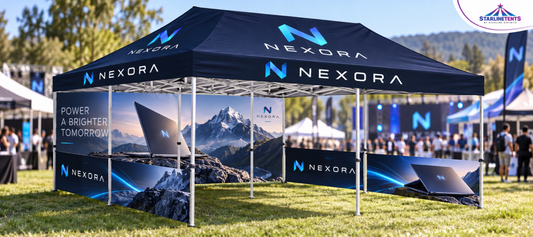
For occasional family celebrations, blank pop-up canopies may be sufficient. Businesses hosting recurring events might prefer custom-printed canopy tents that provide both shelter and branding.
Find the Right Tent for Your Celebration
The best party tents and canopies match your guest layout, available space, and weather requirements.
Compare square, rectangular, star-shaped, and inflatable designs to find the right balance of function and appearance. Explore Starline Tents' canopy options to compare available styles and find a suitable canopy for your next celebration.
FAQs
1. Can I connect two party canopies to create a larger covered area?
Yes, you can connect two compatible canopies if the manufacturer allows it. Use a suitable rain gutter or connector to help prevent water from dripping between them. Each canopy must be anchored separately. Remember that joining two canopies doesn't create one open space because the frames and legs remain in place.
2. Can I set up a party tent on uneven ground?
A slightly uneven surface may be suitable if the tent manufacturer permits it. However, avoid steep slopes, holes, or soft ground that could affect stability. Choose a flat, firm area whenever possible. For larger party tents, have a professional installer inspect the location before setup.
3. How can I keep guests comfortable inside a party tent during summer?
Keep the sides open where possible to allow fresh air to circulate. Use fans if electricity is available and safe to use outdoors. Arrange seating away from direct sunlight and provide plenty of drinking water. During extreme heat, consider an indoor space for guests to cool down.
4. Can I leave a party canopy set up overnight before an event?
Only if the manufacturer allows overnight use and the weather conditions are suitable. Secure the canopy with the recommended anchors or weights and remove loose decorations. Check the forecast before leaving it unattended. If strong winds or thunderstorms are expected, take it down according to the manufacturer's instructions.
5. What type of lighting works best inside a party canopy?
Outdoor-rated LED string lights, battery-powered lanterns, and suitable portable lights are practical options. Choose lighting that matches your event and provides enough visibility for guests. Secure fixtures using manufacturer-approved attachment points, keep electrical cords away from walkways, and avoid hanging heavy lights from the canopy frame.
6. Do I need a permit to set up a party tent in my backyard?
It depends on your location, tent size, and event type. Small backyard canopies may not need a permit, while larger party tents may require approval or inspection. Contact your local building or fire department before the event. Also check HOA rules or property restrictions if they apply.
Tags: