
The Ultimate Guide to Choosing Custom Printed Flags for Business Advertising
Event foot traffic decides the success of many businesses. If people do not notice your storefront, your booth, or your event space, they walk past it. This won’t happen if you have custom printed feather feather flags. Yes, you heard right!
Custom printed flags solve this problem at a very low cost. They stand tall, they move in the breeze, and they pull the eye from a long distance, which other marketing materials do at a medium to high price.
If you are planning to have one, this guide explains how to choose the right custom printed flags for your business. It covers flag types, sizes, materials, bases, and design rules trending in the United States. It also explains the mistakes that waste money, so you can avoid them on your first order.
What Are Custom Printed Flags?
Custom printed flags are fabric flags printed with your own design choice. That design can include your logo, brand colors, a product photo, or a short message such as "Grand Opening" or “Sale Today”, type texts. The flag is attached to a lightweight pole that connects to a base or a ground spike.
Most custom advertising flags are printed using dye-sublimation. During this printing process, ink is infused into the fabric instead of being spread on top. The result is a bright, sharp print that does not crack or peel and stays readable when the fabric moves.
Businesses use custom printed flags in many places:
-
In front of a storefront to attract passing traffic
-
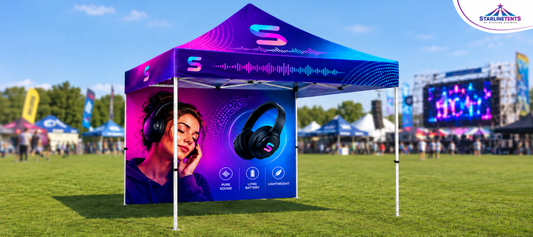
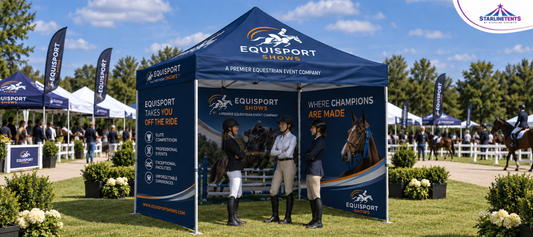
Beside a trade show booth or canopy tent
-
At outdoor markets, festivals, and sports events
-
Along an entrance path to guide visitors
-
At car dealerships, open houses, and grand openings
Why Flags Outperform Many Other Signs
A flat sign only works when someone looks straight at it. However, a flag works differently. It stands 6 to 15 feet tall, so it rises above cars, crowds, and other booths and moves in a way that human eyes are drawn to motion before anything else. That small, constant movement is why promotional flags capture attention that static signs miss.
Flags are also one of the most affordable forms of advertising. A quality flag kit costs a few hundred dollars and lasts through repeated use. Spread across months of daily display, the cost per day is minimal. Few advertising tools can match that value.
Types of Custom Printed Flags
Choosing the right shape matters as much as the design. Each shape behaves differently.
Feather flags
The most popular choice for business advertising. The tall, curved shape looks like a feather. The fabric stays extended along the pole, so your message remains readable even with little or no wind. This makes feather flags for business the safest all-purpose option. They suit storefronts, trade shows, and outdoor events equally well.
Teardrop flags
Shaped as a drop of water, with the fabric pulled tight across the full frame. Because the fabric is under tension, the design never folds or flaps. Teardrop flags work well for logos and simple graphics. Their shorter, wider shape also handles wind better than most styles.
Blade and convex flag
A straighter, more rectangular shape. These offer the largest printable area for the height. Choose them when you need to display more text or a detailed design.
Rectangle and pole flags
The classic flag shape. These need wind to display fully, so they suit open outdoor areas better than sheltered spaces.
For most businesses starting out, feather flags are the recommended first purchase. They balance visibility, readability, and wind performance better than any other style.
Choosing the Right Size
Custom printed flags commonly come in heights from 6 feet to 15 feet or more. Starline Tents, for example, offers custom feather flags in a full range of sizes and styles.
Use these rules to choose:
-
6ft to 9ft: Best for indoor use, trade show booths, and sidewalk displays. A 9ft flag pairs well beside a 10x10 canopy tent without towering over it.
-
12ft: The best all-purpose outdoor size. Tall enough to be seen over parked cars and crowds, but still easy for one person to set up.
-
15ft and above: Best for roadside visibility and large outdoor events. Drivers can see these from a distance, which gives them time to slow down and turn in.
Two practical checks before you order.
-
First, measure your ceiling height if the flag will be used indoors where the full pole height must fit the space.
-
Second, check your local laws. Some municipalities limit sign height, and a quick check avoids an expensive mistake.
Single-Sided vs Double-Sided Printing
This choice confuses many first-time buyers, so here is the plain explanation.
A single-sided flag is printed on one side. The design shows through to the back as a mirror image. It is the more affordable option, and it works well when the design is a logo or graphic that reads acceptably in reverse.
A double-sided flag has two printed layers with a blocker fabric between them. The design reads correctly from both directions. It costs more and weighs slightly more, but it is the right choice when your flag contains text, phone numbers, or a website address, and traffic approaches from both sides.
The simple rule: mostly images, single-sided is fine. Important text, choose double-sided.
Choosing the Right Base
The base is the part most buyers overlook, and it determines where your flag can actually stand.
-
Ground spike
Screws into grass, soil, or gravel. The standard choice for outdoor events and lawns.
-
Cross base
A folding X-shaped base for hard, flat surfaces such as concrete, pavement, and indoor floors.
-
Cross base with water bag
Adds a water-filled ring for weight. Essential for outdoor use on hard surfaces, where wind can tip an unweighted base.
-
Wheel base or drive-over base
A car tire rests on the plate. Common at dealerships and parking lot events.
Match the base to the actual surface at your location. A ground spike is useless on a concrete sidewalk, and an unweighted cross base is unsafe outdoors.
Material and Print Quality
Quality custom business flags are printed on knitted polyester, usually around 110g weight. This fabric is light enough to move in a gentle breeze but strong enough to resist tearing. Look for these features when comparing suppliers:
-
Dye-sublimation printing for colors that stay bright through sun and rain
-
Fade-resistant and waterproof fabric rated for outdoor use
-
Fire-retardant material, which many indoor venues and trade shows require
-
Reinforced stitching along the edges and pole sleeve, since these areas wear first
A well-made flag used daily outdoors typically lasts six months to a year. The same flag used only for weekend events can last several years. Sun exposure and wind hours — not age — determine a flag's lifespan.
Design Rules That Make Flags Work
A flag is read in three seconds from thirty feet away. Design for that reality.
-
One message per flag
Your logo plus three or four words at most. "Fresh Coffee." "Now Open." "Registration Here."
-
Large, bold text
If you must squint at the design file on your screen, the text is too small for the street.
-
High contrast
Dark text on a light background, or light text on a dark background. Avoid similar tones touching each other.
-
Put key elements in the upper two-thirds
The bottom of the flag sits closest to obstructions and moves the most.
-
Match your branding
Your flag, your canopy tent, and your table cover should share the same colors and logo treatment. A matched set looks professional. A mismatched set looks improvised.
Most quality suppliers, including Starline Tents, provide free design proofs before printing. Always review the proof at a small size on your screen. If it reads clearly when small, it will read clearly from across a parking lot.
How Many Flags Do You Need?
One flag attracts attention. A row of flags creates presence. Consider these common setups:
-
Storefront: One or two flags near the entrance or road edge.
-
Trade show or market booth: One flag on each front corner of the booth. Two matching branded flags frame your space and make it easy to find. Many exhibitors bundle flags with a complete trade show canopy package for a coordinated look.
-
Large outdoor events: A line of three to five flags along the approach path. Repetition builds recognition before the visitor even arrives.
Common Mistakes to Avoid
-
Ordering the flag without the correct base for your surface. Confirm the surface first.
-
Overloading the design with text. Details belong on your brochure, not your flag.
-
Choosing the cheapest fabric. Thin, poorly stitched flags fray at the tip within weeks. The pole sleeve and edges are where quality shows.
-
Leaving flags out in storms. Flags handle normal wind well, but severe weather shortens their life. Bringing a flag in takes one minute.
-
Storing flags wet. Like any fabric product, a damp flag packed away grows mildew. Dry it first.
Final Thoughts
Custom printed flags are one of the highest-value advertising tools available to a small or mid-sized business. They cost little, set up in minutes, travel easily, and work every hour they stand. Choose the right shape for your location, the right size for your viewing distance, the right base for your surface, and a simple, bold design and your flag will pay for itself many times over.
Ready to order? Starline Tents offers custom advertising flags in all standard sizes and styles, with free design service, free 3D visuals and proofs, and fast shipping across the USA.
Frequently Asked Questions
What are custom printed flags?
Custom printed flags are fabric flags printed with your own design, such as a logo, brand colors, or a short message. They mount on a lightweight pole with a base or ground spike. Businesses use them to attract attention at storefronts, trade shows, markets, and outdoor events. Most are printed on knitted polyester using dye-sublimation, which locks the ink into the fabric for long-lasting color.
How do custom printed flags help with business advertising?
They add height and motion, the two things flat signs lack. A flag stands 6 to 15 feet tall, so it rises above cars and crowds, and its movement draws the eye naturally. This makes your location visible from a distance and easy to find. Because a quality flag lasts through months of use, the advertising cost per day is among the lowest of any signage option.
Do feather flags work without wind?
Yes. This is one of the most common questions buyers ask on public forums, and the answer is a key advantage of the feather shape. The fabric attaches along the full length of the curved pole, so the design stays extended and readable even in still air. Rectangle-style flags, by contrast, hang flat without wind. If your location is sheltered or indoors, choose a feather or teardrop flag.
What is the difference between feather flags and other custom printed flags?
Feather flags have a tall, curved, feather-like shape and stay readable with or without wind. Teardrop flags hold the fabric under full tension, so the design never flaps, ideal for logos. Blade flags offer the largest print area for text-heavy designs. Rectangle flags need wind to display fully. For general business advertising, feather flags are the most versatile choice.
What size custom printed flag should I choose?
Use 6ft to 9ft flags for indoor spaces and booth displays, 12ft for general outdoor advertising, and 15ft or taller for roadside visibility. Check your ceiling height for indoor use and your local sign bylaws for outdoor use before ordering. When in doubt, 12ft is the most versatile outdoor size.
What kind of base do I need for concrete or pavement?
Use a cross base, and add a water bag for any outdoor use. Ground spikes only work in grass, soil, or gravel. This detail is missed by many first-time buyers and is one of the most frequent complaints in online reviews, the flag arrives, and there is no way to stand it on a hard surface. Confirm your surface before you order.
Are custom printed flags weather-resistant?
Quality flags are made from waterproof, fade-resistant, and often fire-retardant polyester, and they handle sun, rain, and normal wind well. However, no flag is built for storms. Take flags down in severe weather, and always let them dry before storage. These two habits are the biggest factors in how long a flag lasts.
Can I print my company logo on custom printed flags?
Yes. Reputable suppliers print any logo, graphic, or text in full color with no limit on the number of colors. Provide your logo in a high-resolution or vector file for the sharpest result. Most suppliers, including Starline Tents, send a free artwork proof for your approval before printing, and many offer free design assistance if you need help preparing the file.
How long do custom printed flags last?
With daily outdoor use, expect six months to a year of strong color and fabric condition. With occasional weekend use, a flag can last several years. Sun exposure and wind hours determine lifespan more than age. Rotating two flags, storing them dry, and avoiding storms all extend their life significantly.
Where can I buy high-quality custom printed flags?
Choose a supplier that offers dye-sublimation printing, reinforced stitching, a choice of bases, free artwork proofs, and clear turnaround times. Starline Tents offers custom feather flags in a full range of sizes and styles, with single-sided or double-sided printing, free design help, free 3D proofs, and fast shipping across the USA.
Tags:
Previous
How to Choose the Best Portable Banner Display Stand for Maximum Brand Visibility
Next
How to Choose the Best Custom Printed Tablecloths for Trade Shows and Events