
How to Choose the Best Custom Printed Tablecloths for Trade Shows and Events
At any trade show, the table is the first thing visitors touch. It holds your samples, your brochures, and your sign-up sheet. It is also the largest branded surface at eye level. A plain white or bare table makes even a good booth look unfinished and unprofessional too. Custom printed tablecloths turn that same table into a professional display that carries your brand across the aisle.
This guide explains how to choose the right custom printed tablecloths for trade shows and events. It covers styles, sizing, fabrics, printing methods, and care, plus the buying mistakes that show up again and again in exhibitor forums.
What Are Custom Printed Tablecloths?
Custom printed tablecloths are fabric table covers printed with your logo, brand colors, or full-surface graphics. They fit the standard folding tables used at trade shows, conferences, job fairs, markets, and retail events. Quality versions are printed on durable polyester using dye-sublimation, which bonds the ink into the fabric so the graphics do not crack, peel, or fade with washing.
Beyond branding, custom table covers serve a practical purpose. The fabric drapes to the floor and hides everything stored under the table like boxes, bags, extra stock, and personal items. This way, your booth looks clean, and your supplies stay within reach.
Why Branded Tablecloths Matter at Events
Consider how visitors move through a trade show. They scan hundreds of booths in minutes. Their eyes land on tables constantly, because tables sit at natural viewing height and hold the items people want to examine.
A branded tablecloth works for you in three ways:
-
Recognition. Your logo faces the aisle at all times, even when you are busy with another visitor.
-
Professionalism. A fitted, wrinkle-free, logo-printed table signals an established business. A bare rental table signals the opposite.
-
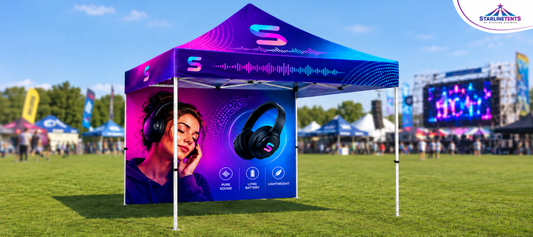
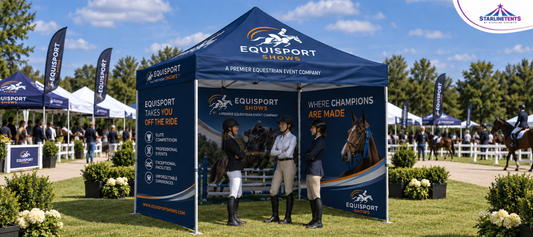
Cohesion. When your tablecloth matches your canopy tent, your flags, and your banners, the whole booth reads as one deliberate brand presentation.
Logo tablecloths also appear in every photo taken at your booth. Long after the event, your branding continues working in social media posts and event coverage.
The Three Main Styles
Custom table covers come in three styles. The choice is one of the most discussed topics among exhibitors, so here is the practical breakdown.
Throw (draped) covers
A loose rectangular cover that drapes over the table and hangs toward the floor. This is the most versatile and most forgiving style. A throw tolerates small differences in table size, which matters because venue tables are not always the size promised. It also allows easy access to storage underneath. If this is your first tablecloth, the throw is the practical starting point.
Fitted covers
Sewn with squared, tailored corners to match the table's exact dimensions. The result is a crisp, box-shaped look with clean lines and no bunched fabric. Fitted covers look sharper than throws, but they must match the table size exactly, a 6ft fitted cover will not work on an 8ft table and vice versa.
Stretch (spandex) covers
Made from stretch fabric that pulls tight over the table and secures under the legs. The surface sits completely smooth, with no wrinkles and no loose fabric. This modern look suits tech companies and contemporary brands. Like fitted covers, stretch covers are size-specific.
Open-back vs closed-back
Fitted and throw covers come in both versions. A closed-back cover drapes on all four sides and looks finished from every angle. A three-sided, open-back cover leaves the rear open, so you can sit behind the table and reach stored items without lifting the fabric. If you work from behind your table, choose open-back.
Choosing the Right Size
Standard trade show tables are 30 inches tall and either 6 feet or 8 feet long. Smaller 4-foot tables appear at registration desks and compact booths.
The sizing rules:
-
Confirm the table size with the event organizer before ordering
This is the single most repeated piece of advice from experienced exhibitors. Venues supply different tables, and a wrong-size fitted cover cannot be adjusted on site.
-
Match fitted and stretch covers to the exact table length
No exceptions.
-
Choose a throw if your table sizes vary from event to event.
Its loose drape covers small differences, and adjustable 6ft-to-8ft throws exist for exhibitors who face both sizes regularly.
Starline Tents offers custom printed table covers in fitted, stretch, and runner styles, sized for standard 6ft and 8ft event tables.
Fabric and Print Quality
The fabric determines how the cover looks after ten events, not just at the first one. Look for these features:
-
Premium polyester fabric
Durable, wrinkle-resistant, scratch-resistant, and heavy enough to drape properly without looking flimsy.
-
Dye-sublimation printing
The ink becomes part of the fabric. Colors stay vivid through repeated washing, and the print never cracks or peels the way surface printing can.
-
Machine-washable fabric
Trade show tables collect coffee rings, fingerprints, and dust. A washable cover resets to new before every event.
-
Flame-retardant certification
Many convention centers require table covers to meet fire-safety standards. Ask your supplier before ordering, and keep the certificate with your booth kit — some venues ask to see it.
-
Full-color, edge-to-edge printing
Quality suppliers print the entire surface, not just a logo patch, at no color limit.
Print Coverage: How Much Branding Do You Need?
You do not always need a fully printed cover. There are three common levels:
-
Full-print cover
Graphics across the entire surface such as top, front, and sides have maximum impact, best for brands with strong visual identities.
-
Logo-front cover
A solid brand-color cover with your logo printed large on the front panel. Clean, professional, and more affordable. This is the most popular choice.
-
Table runner
A narrow printed strip laid over a plain cloth. The budget option, useful when you share tables or need branding across many locations at once.
Whichever you choose, keep the front panel simple: your logo, and at most one short line such as your tagline or website. Visitors read a table front in two seconds while walking.
Design Tips From the Show Floor
-
Put the logo in the upper half of the front panel
The bottom third is often hidden behind chairs, product displays, or visitors standing at the table.
-
Use high contrast
A light logo on a dark cover, or the reverse. Mid-tone logos on mid-tone fabric disappear under exhibition lighting.
-
Match the exact brand colors
Provide Pantone or hex color codes with your artwork. "Close" reds and blues look wrong next to your other displays.
-
Request a proof
Reputable suppliers, including Starline Tents, provide free artwork proofs and 3D visuals before printing. Review the proof carefully, printed fabric cannot be edited later.
-
Coordinate the full booth
A tablecloth designed alongside your trade show canopy package creates a unified space that looks far more established than mismatched pieces.
Care, Storage, and Transport
A quality custom tablecloth should serve for years. Protect the investment with simple habits:
-
Wash in cold water on a gentle cycle. No bleach and no harsh detergents, which damage the print.
-
Air-dry or tumble-dry on low heat. High heat can affect the fabric and colors.
-
Remove wrinkles with a steamer or a low-heat iron on the reverse side. Steaming the cover on the table during setup takes two minutes and makes a visible difference under show lighting.
-
Fold loosely and store dry. Rolling the cover instead of folding it reduces creases even further.
-
Transport it in your booth kit alongside the rest of your display, so nothing is forgotten on event morning.
Common Buying Mistakes to Avoid
-
Ordering a fitted cover without confirming the table size. The most common and most expensive mistake.
-
Choosing thin, lightweight fabric to save money. Thin covers look transparent under bright venue lighting and wrinkle badly.
-
Ignoring the flame-retardant requirement. Some venues will not allow a non-certified cover on the floor.
-
Overcrowding the design. Phone numbers, service lists, and long text belong on your handouts, not your tablecloth.
-
Skipping the open-back option when you sit behind the table. Lifting a closed cover all day to reach supplies gets old by the first coffee break.
Final Thoughts
The table is the hardest-working surface in your booth. Dressing it in a quality custom printed tablecloth is one of the lowest-cost, highest-return upgrades an exhibitor can make. Choose the style that matches how you work, confirm the table size before ordering, insist on dye-sublimation printing on washable polyester, and keep the design simple and bold.
Ready to upgrade your table? Starline Tents prints custom table covers in fitted, stretch, and runner styles on durable, flame-resistant polyester, with free design service, free 3D visuals and proofs, and fast shipping across the USA.
Frequently Asked Questions
What are custom printed tablecloths?
Custom printed tablecloths are fabric covers for event tables, printed with your logo, brand colors, or full-surface graphics. They fit standard 4ft, 6ft, and 8ft folding tables used at trade shows, conferences, and markets. Quality versions use dye-sublimation printing on durable polyester, so the graphics stay bright through repeated use and washing.
How do I choose the best custom printed tablecloths for trade shows?
Start with three decisions. First, the style: a throw for flexibility, a fitted cover for a tailored look, or a stretch cover for a modern, wrinkle-free look. Second, the size: confirm the actual table length with the event organizer, because fitted and stretch covers must match it exactly. Third, the fabric: choose machine-washable polyester with dye-sublimation printing and flame-retardant certification. Then keep the design simple, a bold logo and strong contrast beat a crowded layout every time.
What is the difference between a throw, a fitted cover, and a stretch cover?
A throw drapes loosely over the table and tolerates small size differences, which makes it the most versatile choice. A fitted cover is sewn with squared corners for a crisp, box-shaped look, but it must match the table size exactly. A stretch cover pulls tight over the table and secures under the legs for a completely smooth, modern surface. Exhibitors on public forums consistently recommend the throw for first-time buyers and the fitted or stretch styles once your table size is consistent.
What size custom printed tablecloth do I need?
Standard trade show tables are 30 inches tall and 6 or 8 feet long, with 4-foot tables used for smaller setups. Confirm the size with show management before ordering, this is the most repeated advice from experienced exhibitors. If your events supply different table sizes, choose a throw style, which adapts to small variations.
Should I get an open-back or closed-back table cover?
Choose open-back (three-sided) if you sit behind your table and need constant access to stored supplies. Choose closed-back (four-sided) if your table is visible from all angles or placed in an island booth. This question comes up often in exhibitor communities, and the answer depends entirely on how you work your booth.
Can I print my company logo on custom tablecloths?
Yes. Suppliers print logos, taglines, and full graphics in unlimited color. Provide a vector file or high-resolution artwork, along with your exact brand color codes, for the sharpest result. Reputable suppliers provide a free artwork proof before printing so you can verify the layout and colors.
What material is best for custom printed tablecloths?
Premium polyester is the standard for trade show use. It is durable, drapes well, resists wrinkles and stains, and accepts dye-sublimation printing beautifully. Stretch covers use a spandex blend for their tight fit. Confirm that the fabric is flame-retardant, since many convention venues require it.
Are custom printed tablecloths washable and reusable?
Yes. Quality dye-sublimated polyester covers are machine washable in cold water on a gentle cycle. Avoid bleach and high heat, and air-dry or tumble-dry on low. Because the ink is bonded into the fabric, the print survives washing without fading or peeling. With proper care, one cover serves for many years of events.
How do I keep my tablecloth wrinkle-free at events?
Roll the cover instead of folding it for transport, and steam it on the table during setup, a small handheld steamer takes two minutes and removes travel creases. Exhibition lighting is harsh and highlights every wrinkle, which is why experienced exhibitors treat the steamer as standard booth equipment.
How long does it take to make custom printed tablecloths?
Typical production runs about one week after artwork approval. Suppliers such as Starline Tents start production once you approve the design, and design proofs are often ready within hours of submitting your artwork. Order at least two to three weeks before your event to leave room for proof review and shipping.
Where can I buy high-quality custom printed tablecloths?
Choose a supplier offering dye-sublimation printing on premium polyester, free artwork proofs, flame-retardant fabric, and clear turnaround times. Starline Tents prints custom table covers in fitted, stretch, and runner styles on durable, washable, flame-resistant polyester, with free design help, free 3D proofs, and fast shipping across the USA.
Tags:
Previous
The Ultimate Guide to Choosing Custom Printed Flags for Business Advertising
Next
The Complete Guide to Custom Event Signage for Trade Shows and Outdoor Promotions